


Nutri‐Aktiv Fitoxi Micros
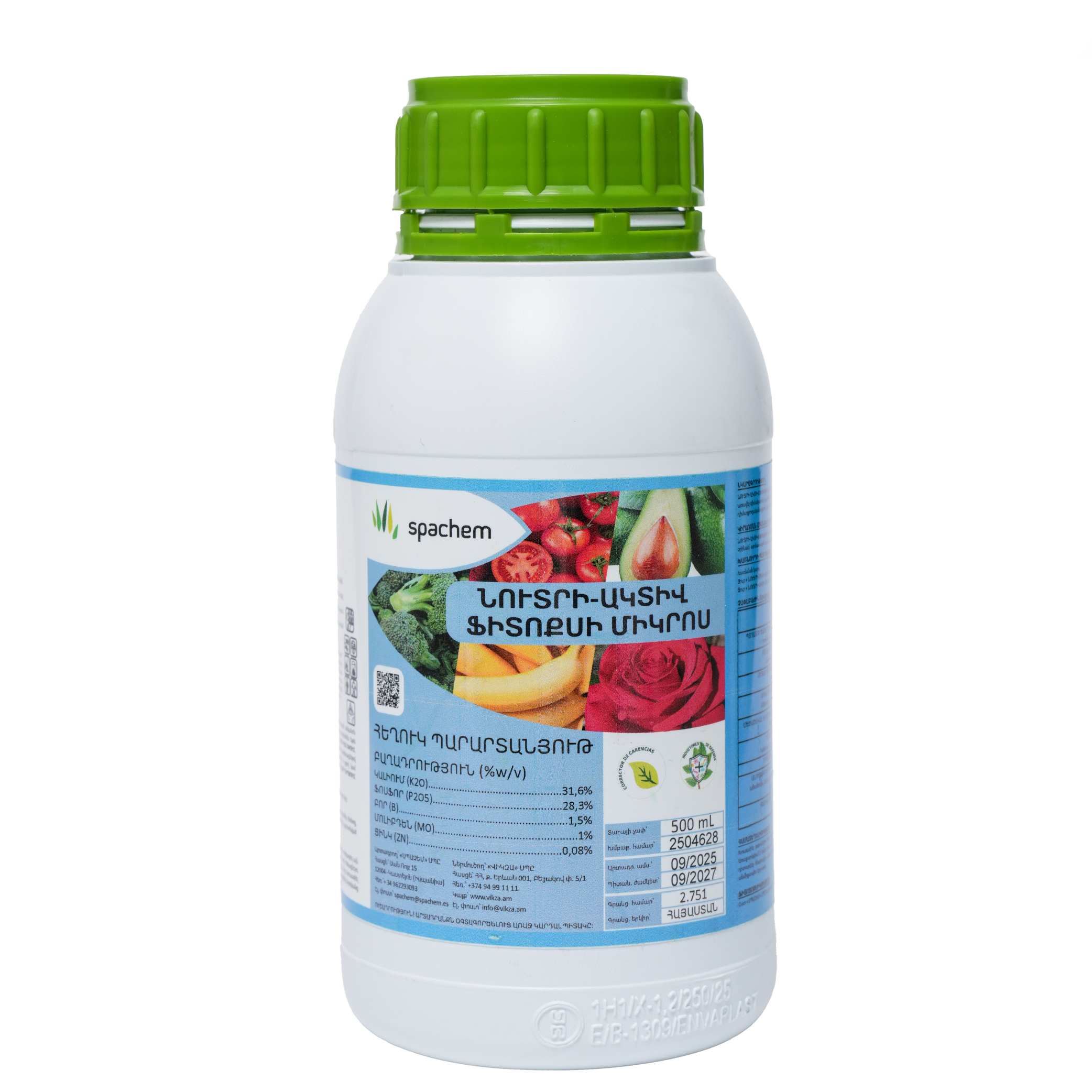
100ml, 250ml, 500ml, 1L, 5L, 10L, 20L, 200L, 1000L


NUTRI‐AKTIV FITOXI MICROS MICROS strengthens the natural defenses of plants, making them more resistant to adverse conditions. Stimulates the photosynthesis process. Provides greater vitality, strength and resistance in all crops.
| CROPS | FOLIAR (L/Ha) | FERTIRIGATION (L/Ha) |
|---|---|---|
| Fruit trees (peach, nectarine, plum, cherry, apricot, kumquat, pear, apple, pomegranate, persimmon, fig etc.) | 1.5 - 2 | 3 - 5 |
| Vegetables (tomato, pepper, chili, eggplant, potato, carrot, zucchini) | 1 - 1.5 | 3 - 5 |
| Edible leaf crops (cabbage, lettuce, broccoli, spinach) | 1 - 1.5 | 3 - 5 |
| Liliaceas and other crucifera (garlic, onion, asparagus, turnip, radishes) | 1 - 1.5 | 3 - 5 |
| Extensive and industrial (wheat, corn, barley, tabaci, beet) | 1.5 - 2 | 3 - 5 |
| Berries (strawberry, raspberry, blueberry, blackberries, currant, vine) | 1 - 1.5 | 3 - 5 |
| Cucurbitaceas (melon, watermelon, pumpkin) | 1.5 - 2 | 3 - 5 |
| Aromatic and ornamental (cilantro, parsley, mint, sage, rosemary, thyme, tarragon, rose, gerberas, thuja, fir tree, carnations) | 1 - 1.5 | 3 - 5 |
| Legumes (beans, peas, lentils) | 1 - 1.5 | 3 - 5 |
Nutri‐Aktiv Fitoxi Micros
NUTRI‐AKTIV FITOXI MICROS MICROS strengthens the natural defenses of plants, making them more resistant to adverse conditions. Stimulates the photosynthesis process. Provides greater vitality, strength and resistance in all crops.
-
Phosphorus (P₂O₅)
28.3 % -
Potassium (K₂O)
31.6 % - Boron (B) 1.5 %
- Molybdenum (Mo) 1.0 %
- Zinc (Zn) 0.08 %
NUTRI‐AKTIV FITOXI MICROS MICROS is a physiological inducer based on Potassium Phosphite enriched with Boron and microelements that has a double function on crops, on the one hand it acts as a source of Phosphorus, Potassium, Boron, Molybdenum, zinc and Manganese in addition, due to The presence of phosphorus in the form of PHOSPHITE ion acts as a stimulant of the self-defense mechanisms of plants against pathogenic fungi in the roots, neck, stems, fruits, etc.
NUTRI‐AKTIV FITOXI MICROS MICROS is recommended to apply it in those moments in which the consumption of these elements is greater such as formation of the root system, flowering, setting, fattening and maturation. Prevents diseases caused by waterlogging and rot in crops.
Preparation of the mixture
Fill half of the tank with clean water and start stirring. Shake the container before use and add the required amount of product. Continue stirring during spraying.
Mixing order:
Water + NUTRI‐AKTIV FITOXI MICROS
Water + NUTRI‐AKTIV FITOXI MICROS + pesticide (when used in mixtures).
Adjust the pH.
It can be applied Foliar application or in fertigation
Shake the container before using the product. Apply with clean water. Do not spray during hours of maximum sunshine. Preferably use at the beginning of the day or at sunset.
NUTRI‐AKTIV FITOXI MICROS MICROS is compatible with most of the phytosanitary products normally used, it is advisable not to mix it with dimethoate, dicofol or other very alkaline products. Shake continuously and apply immediately. It is recommended to first make a premix with a small amount of product in the desired tank and observe possible adverse changes (precipitation, flocculation, etc.).
PHYTOTOXICITYIt is not phytotoxic when used according to the recommendations and doses of SPACHEM S.L. In case of mixing, perform a small scale test to check compatibility and phytotoxicity.
REMARKS
The recommendations and information we provide are the result of extensive and rigorous studies and tests, however, numerous factors beyond our control may intervene in the use (preparation of mixtures, application, weather, etc.). The company guarantees the composition, formulation and content. The user will be liable for any damage caused ( lack of efficacy, general toxicity, residues, etc.) due to total or partial non-observance of the label instructions.
The icon indicates specific fertilizers to address plant nutritional deficiencies.
The icon represents products formulated to activate the natural defense mechanisms of plants against biotic (pathogens, pests) and abiotic (drought, salinity, cold, radiation) stress situations.